The radio is a place
When I started Parea Radio, there was no room you could walk into and point to and say, this is the radio. There was no studio or booth, no antenna, and no physical place connected to the project. There was a website, a stream, a growing folder of shows on my computer and an idea that was still easier to feel than to explain. I knew I wanted to create an independent radio station around music and the people sharing it, but I didn’t yet understand what that might mean beyond putting together a programme and inviting people to contribute.
The first shows arrived as files, but the people behind them arrived in a way I had not really planned for. I didn’t know any of the artists beforehand. Some found Parea themselves, others heard about it through somebody else, and gradually people began reaching out, sending music and proposing shows. Most of them didn’t know each other either. After a while, names on the programme became familiar and the station started developing its own network: people listened to each other’s shows, conversations started, somebody would hear something and get in touch with the person who had played it. It changed the way I thought about what we were building. The radio seemed to exist somewhere beyond the website and the server carrying the audio, in the relationships forming around it.
The name Parea comes from a Greek word that is difficult to translate without making it sound more formal than it actually is. A parea can simply be a group of friends, but the word also describes the experience of being together: the people you sit around a table with, the group that stays for another drink, the conversation that continues even though nobody planned for it to last that long. I liked the name because it didn’t describe a genre or a scene, but what I hoped could form around the station.
Starting online made that possible before we had a studio. Someone could make a show in Athens, another person elsewhere in Europe could send theirs, and both could enter the same programme. It is easy to overlook how strange that remains: someone can sit alone in a room, record something shaped by their own taste and surroundings, send it away, and later a person they have never met can spend an hour listening to it somewhere else. The transmission is technical, but what travels through it is personal.
I have been thinking about listening more since starting the station, partly because I deliberately avoid algorithmic ways of discovering music. I don’t use Spotify and try not to outsource discovery to systems designed to predict what will keep me listening. That choice is musical, but it is also political. Spotify co-founder Daniel Ek’s investment company, Prima Materia, is an investor in Helsing, a defence AI company, where Ek is also co-chairman. That sits against my own values and the values we are trying to build into Parea. For me, how we listen and what systems we support are not separate questions.
Radio asks for a different relationship. You arrive halfway through something, you don’t necessarily know what is playing and you cannot immediately decide what comes next. Sometimes you hear a record that sends you down a new path; sometimes something you would never have chosen yourself. Both are part of listening. When I listen to somebody’s radio show, I am not only being shown music I might like; for an hour or two I am following another person’s logic. The sequence might come from records collected for years, something heard last week, music connected to the city they live in, or simply a mood. After listening regularly, you begin to recognise parts of someone through those decisions. In that sense, radio can be a way of giving another person your attention rather than asking a system to give you more of yourself.
That freedom has been part of Parea from the start. Artists have always been able to decide what they want to play and what shape their show should take, within the values we share as a station. I never wanted people to come into Parea and be told how they should sound. In the Greek music scene, I had seen and heard enough stories about closed doors, unanswered messages and people being told no before they had really been given a chance. “Community” has also become an easy word for cultural projects to use, sometimes more as a label than a way of behaving. I wanted Parea to be specific about what the word meant in practice. From the beginning I made myself a few simple promises: I would reply to people, I would be transparent about what the station could and could not offer, and I would not reject somebody simply because they were unknown to me or outside an existing circle.
The station’s character now belongs to the people who have trusted it with their music. Residents and guest artists have brought sounds, formats and ideas I could never have planned on my own. Parea would not exist in any meaningful sense without the artists who sent a first show to a radio station that was then little more than a stream and an idea, and who kept returning, sharing, suggesting and making space for one another.
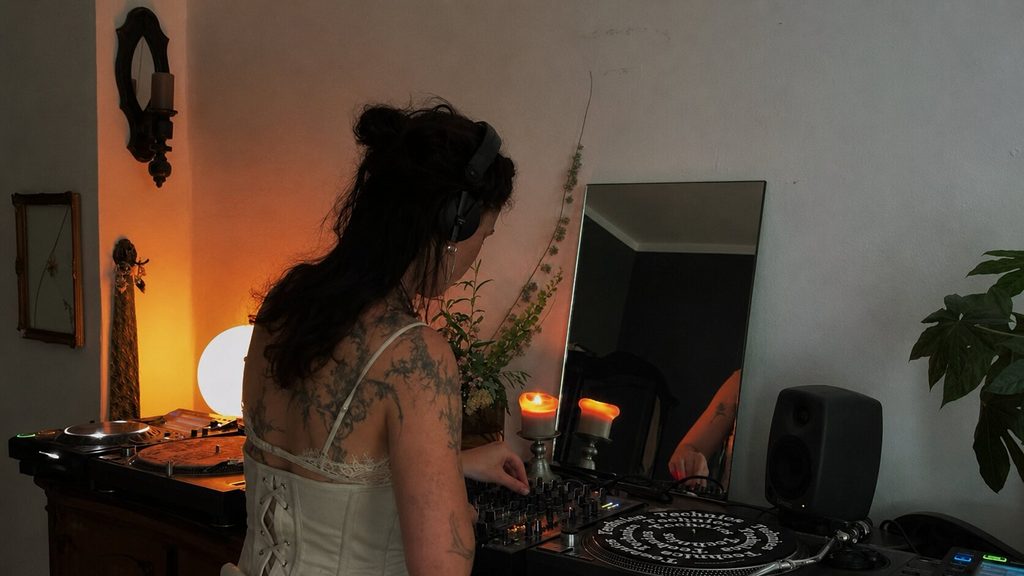
There is a contradiction in trying to build this kind of independent space online. Parea depends on infrastructure that is anything but independent: hosting, streaming technology, social platforms, messaging tools, servers, data centres and cables we rarely think about while listening. The language of the “cloud” makes all of this sound weightless, though there is nothing immaterial about the systems carrying a broadcast from one place to another. They are owned and governed by somebody, and a small radio station like ours has little control over most of them.
The answer is not to pretend we can exist outside those systems. We can’t build our own internet, and independence becomes fairly meaningless if it requires complete self-sufficiency. What seems more interesting is what can be done with the infrastructure available to us. A platform can still help two artists find each other; a group chat can become somewhere people exchange knowledge or organise a project; a website can become an archive. Perhaps the infrastructure we have the most agency over is not the technical layer at all, but the social one: the habits of sharing, trusting, contributing and listening that determine what a space becomes.
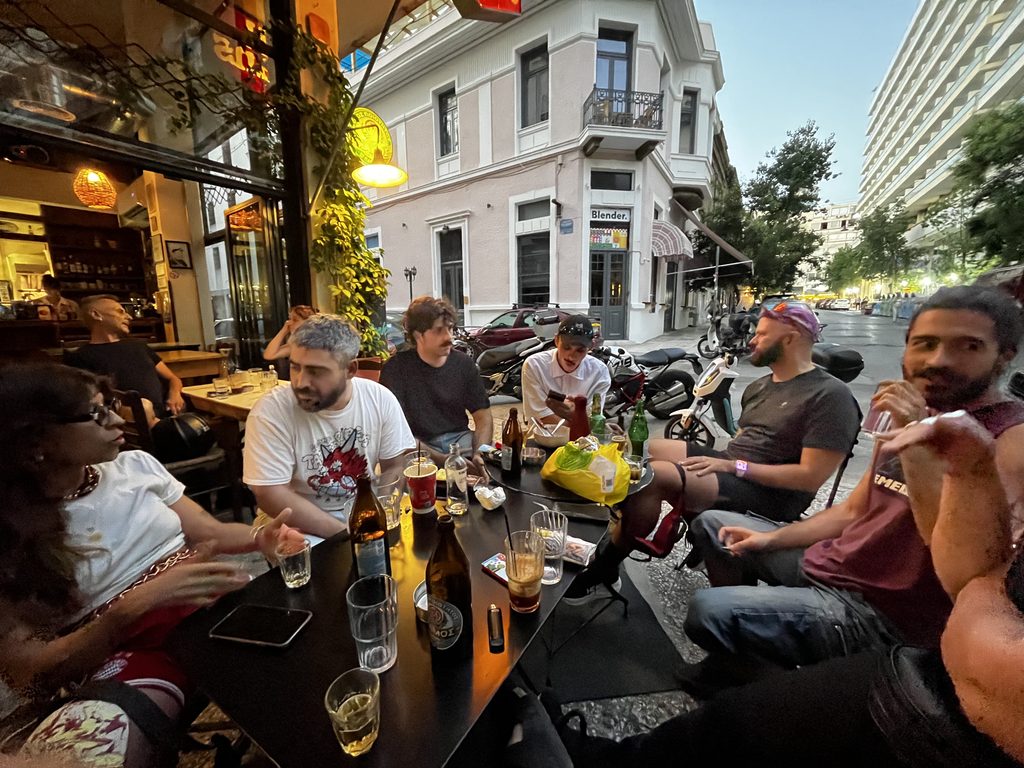
I felt this very clearly at our first Parea meetup in Athens. Until then, many of the people involved had mostly existed as names in messages, artist photos and blocks in the programme. Suddenly we were sitting around the same table, talking about what the radio needed, what wasn’t working, what people wanted to help with and what we might do together. Some of the discussion was mundane, other parts moved towards events and collaborations, but what stayed with me was simply that the meeting existed at all. A project that had begun through files travelling across the internet had somehow produced a table with people sitting around it.
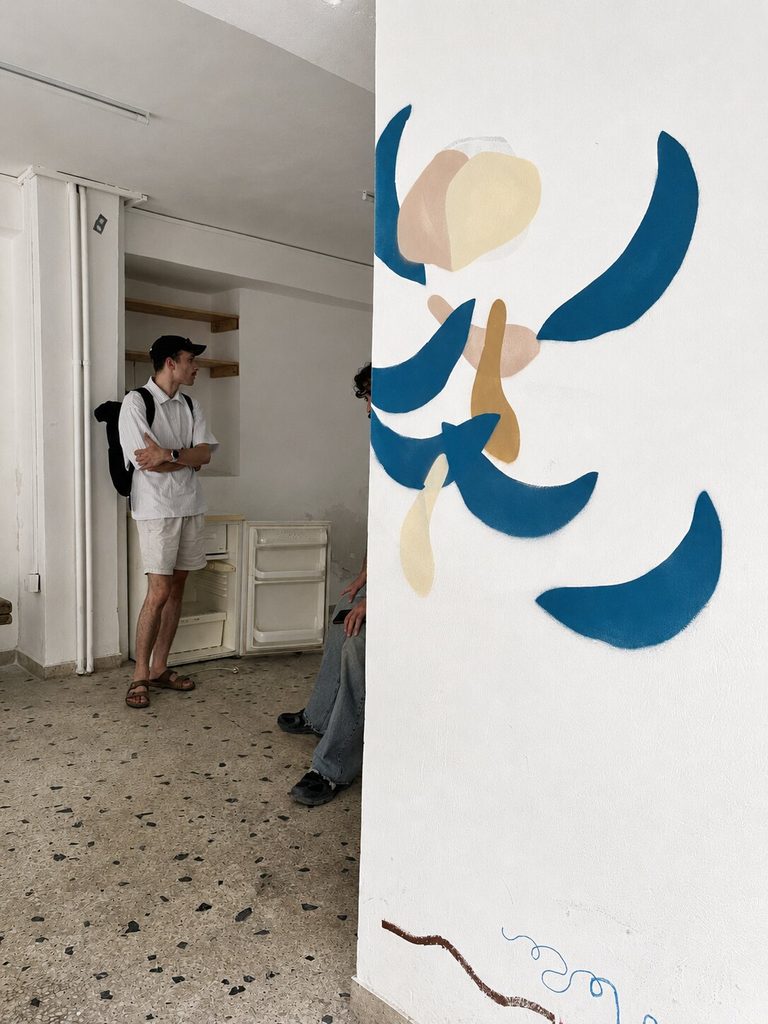
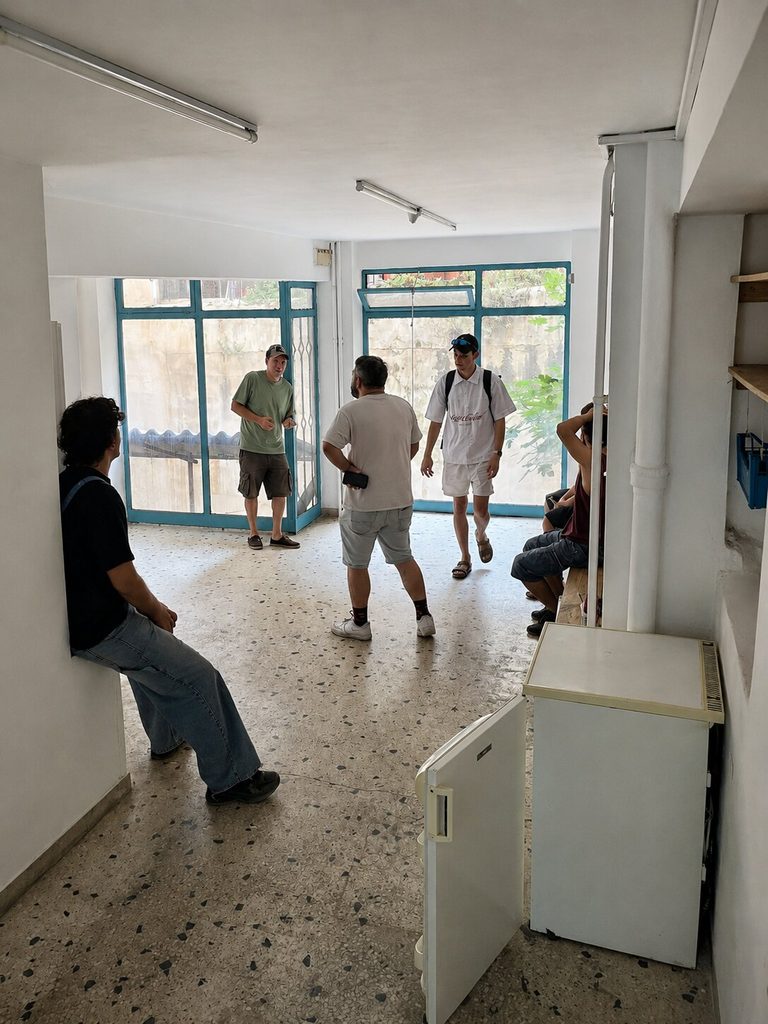
Now that movement from the online to the physical is entering a new chapter. From the beginning of September, Parea will have its first permanent space in Athens. We have already visited it twice with residents, inspecting what needs to be done and imagining what it might become. At the moment it is almost a blank canvas, which feels right. We will build a radio studio there, but that is only one part of the plan. More importantly, we want it to become a community space: somewhere for listening sessions, workshops, meetings, small events, collaborations, recordings, conversations and simply spending time together. The residents will help build it, use it and inevitably change it. That feels like the natural continuation of how Parea has grown. We did not build a room and then create its online presence. The online station came first, and the relationships that formed through it eventually made us want a room of our own.
The archive has produced another change in how I understand the station. At first it was mostly practical: radio passes quickly, people miss things, and listeners should be able to return to a programme later. As it has grown, the archive has started to look less like a collection of files and more like a subjective record of a community at a particular moment. It holds people documenting scenes they are close to, DJs moving away from what they normally play in clubs, residents following temporary obsessions, and shows shaped by where somebody was living or what they were listening to that month. None of it claims to be a history. It simply leaves traces.
Small cultural projects and scenes are often poorly remembered. A venue closes, a collective stops organising, a domain expires, an account disappears or a platform changes, and something that occupied a large part of people’s lives becomes difficult to find. An archive cannot preserve the relationships themselves, but at least it can say: these people were here, they were listening to this, they thought it was worth sharing.
This is part of what makes the radio contribution to TRANSEUROPA interesting to me as well. The takeover will belong to a particular moment; people will broadcast and listen, the programme will finish and everyone will move on. What remains afterwards will not reproduce that moment, nor should it, but the archive can hold onto a trace of it and place it alongside the other people and sounds that have passed through the station.
September feels less like the point when Parea finally becomes “real” and more like another beginning. The physical space gives us possibilities we did not have before, but it also asks the same question the radio has asked from the beginning: what happens when you give people room and trust them to use it? I don’t know exactly what the answer will look like, and I would rather not decide it in advance. If Parea is going to deserve the word community, the room should be shaped through the people who inhabit it just as the station has been shaped by the people who broadcast through it.
For now, much of Parea still exists as an invisible signal moving through infrastructure we don’t see. Somebody sends something and somebody else receives it, yet around that exchange other things have accumulated: conversations, friendships, disagreements, offers to help, ideas that came from elsewhere and meetings that would not otherwise have happened. Maybe reclaiming the cloud begins somewhere in that shift: not by pretending that a small cultural project can take ownership of the infrastructure beneath it, but by making different use of it, creating relationships that are not entirely organised around prediction, optimisation or consumption, preserving things that would otherwise disappear, and allowing an invisible connection to become something as ordinary and tangible as people sitting around the same table. For the moment, that feels like enough of a definition of Parea Radio: a place we are still learning how to make together.